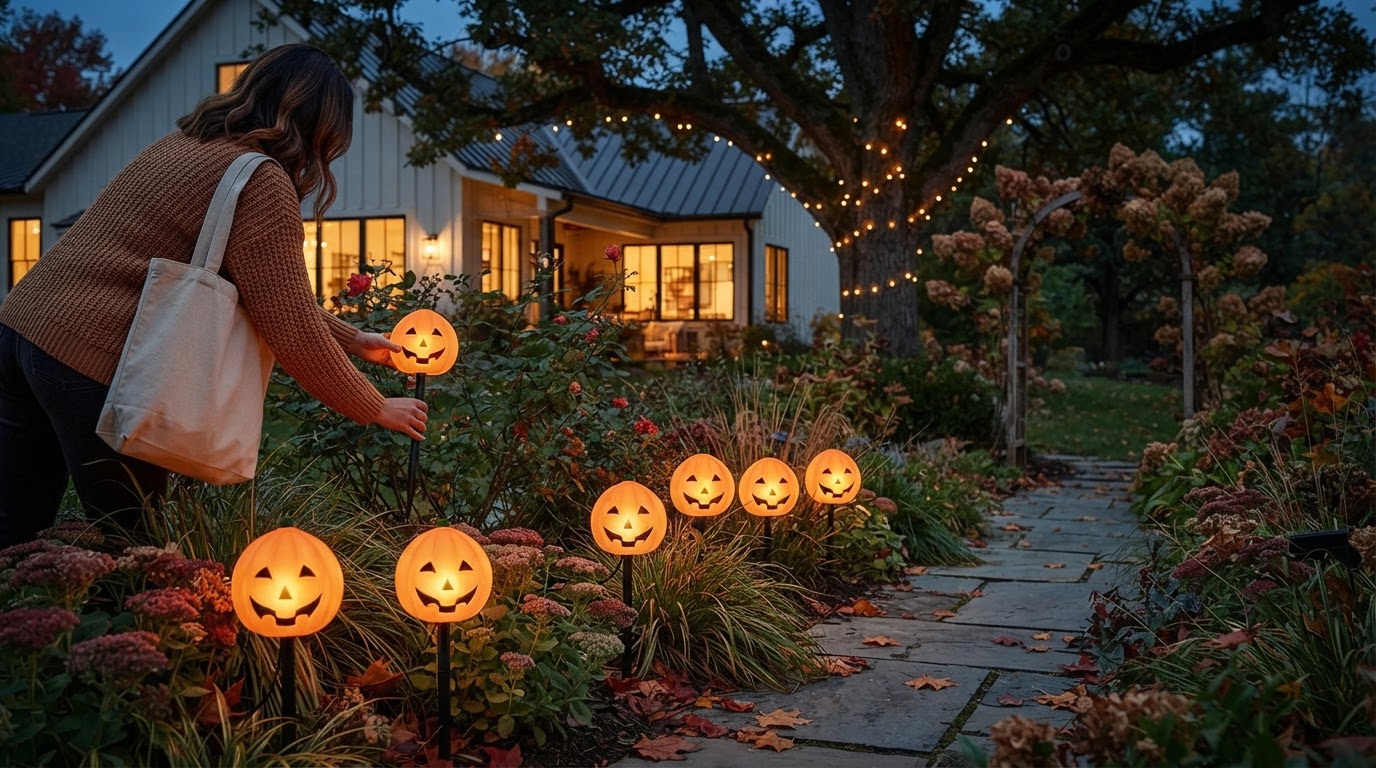
Integrating the solar Pumpkin Stake into Garden Lighting
 Priya RamanSenior Analyst
September 18, 2026 — The shift toward sustainable seasonal displays has accelerated this autumn, placing the solar Pumpkin Stake at the center of energy-efficient landscape design. As homeowners move away from high-voltage wiring, these light up pumpkin garden decor options offer a balance between aesthetic warmth and environmental responsibility.
The current market for illuminated yard displays emphasizes durability and weather resistance to ensure longevity through the varying temperatures of the fall season. According to retail analysis from At Home, many consumers are opting for plastic options that hold up well to the elements compared to traditional glass, specifically for outdoor lantern displays. This transition toward resilient materials allows for a more permanent integration of seasonal lighting into existing garden beds without the risk of breakage during heavy winds or frost.
The Three-Tier Placement Model
When evaluating the integration of the solar Pumpkin Stake into a landscape, a Three-Tier Placement Model provides a structured framework for lighting design. Two axes matter here: the proximity to the primary walkway and the density of existing foliage. The first tier focuses on perimeter definition, where the solar Pumpkin Stake serves as a structural marker. In this capacity, the unit functions as a navigational aid, requiring a clear line of sight to the sun for its integrated photovoltaic cells. The second tier involves mid-ground layering, where the stakes are interspersed with perennials to create depth. Once you see it this way, the lighting is no longer just a decoration but a tool for visual expansion of the property. The third tier addresses focal point highlighting, using the concentrated glow of the LED to draw attention to specific garden features like stone walls or oak trees.
Technically, the solar Pumpkin Stake is engineered to meet the demands of high-traffic residential areas. Based on current performance metrics, these units are designed to withstand standard precipitation while maintaining a consistent discharge cycle throughout the night. The internal battery configuration is optimized for the shorter daylight hours typical of late September and October, ensuring the illumination remains active during peak evening hours. Unlike traditional plug-in luminaries, these stakes operate on an autonomous light-sensing circuit that triggers the LED at dusk, eliminating the need for external timers or manual intervention. This autonomy is critical for maintaining a cohesive look across a large lawn without the labor of individual management.
Expert tip: To maximize the runtime of your stakes, ensure the solar panel is cleaned with a damp cloth every two weeks to remove pollen and dust, which can reduce charging efficiency by up to 20%.
The strategic deployment of these units is further enhanced by following a specific decision rule: if a walkway exceeds twenty feet, staggered placement is superior to linear alignment to prevent a "runway" effect. This approach is explored in detail when optimizing outdoor lighting with the solar Pumpkin Stake. For those focusing strictly on transit areas, fall pathway lights solar provides a complementary solution. If your design leans toward a more festive or thematic aesthetic, integrating halloween garden stakes solar can add variety to the texture of the light. Ultimately, understanding why choose the solar Pumpkin Stake for fall lawn decor comes down to the balance of durability and the ease of a wireless installation.
Selecting the right light up pumpkin garden decor ensures your landscape remains vibrant throughout the season with minimal maintenance.
Sources
- Halloween Pumpkins & Pumpkin Decorations - Grandin Road
- Light up Pumpkins - Pinterest
- Halloween Pumpkins 2026 & Jack-O'-Lantern Decor | At Home