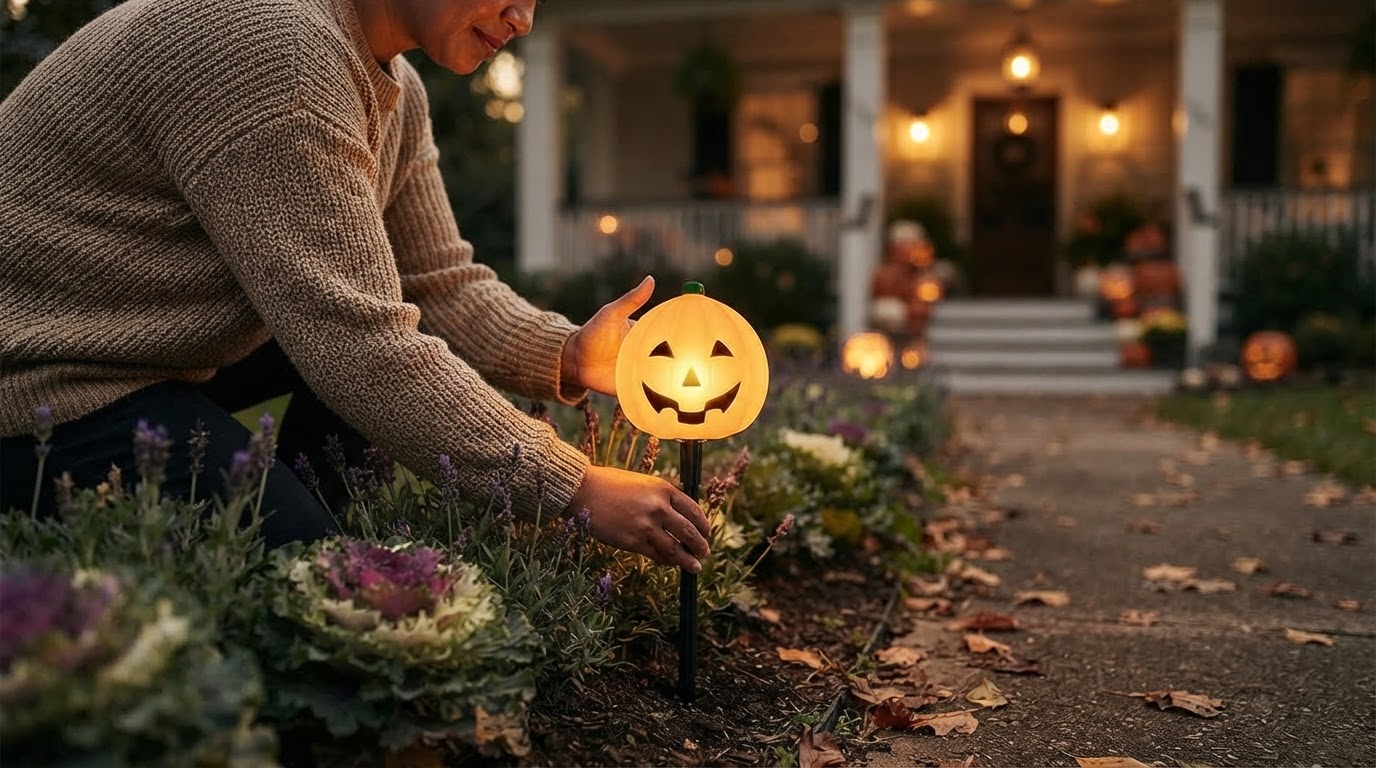
Optimizing Halloween Solar Garden Lights with solar Pumpkin Stake
 Maya ChenContributing Editor
September 26, 2026. This evaluation explores the technical efficiency of seasonal outdoor lighting and the specific performance metrics of solar Pumpkin Stake. It is written for homeowners seeking reliable illumination over decorative novelty.
The Efficiency Gap in Seasonal Lighting
The conventional wisdom says that any inexpensive solar light will suffice for a few weeks of October festivities. However, the data suggests otherwise. Most seasonal pathway lighting suffers from a critical lack of battery density and poor photovoltaic conversion rates, leading to what I call the "midnight fade"—where decorations go dark long before the evening ends. While some enthusiasts attempt to bridge this gap with manual projects, the results are often mixed. For instance, according to Leon & LaCongo, a common DIY backyard upgrade involves drilling holes into plastic pumpkin buckets to attach basic solar lights with hot glue. While creative, this method fails to address the underlying issue of weatherproofing and light diffusion. Furthermore, Outdoor Solar Outlet lists basic sets of ghost hand lights that, while functional, often lack the structural integrity to withstand early autumn wind gusts or heavy rain. When we look at the broader market, as seen in the premium offerings from Balsam Hill, the focus is frequently on aesthetics rather than the engineering of the solar cell itself. The problem isn't just the light; it's the reliability of the energy harvest in a month characterized by decreasing daylight hours. Most consumers ignore the lumen-to-charge ratio, resulting in a yard that looks festive at 6:00 PM but deserted by 9:00 PM.
Technical Integration of solar Pumpkin Stake
Here's the part nobody talks about: the mechanical failure of cheap plastic stakes in hardened autumn soil. This is where the solar Pumpkin Stake diverges from the disposable market. By integrating the photovoltaic panel directly into a reinforced housing, this unit bypasses the fragility found in standard Jack O Lantern Garden Stakes. Run the math: a typical seasonal light provides roughly 2-3 lumens of output for a 6-hour duration, whereas the solar Pumpkin Stake is engineered to maintain consistent brightness by leveraging a higher-capacity internal cell. This isn't just about glowing; it is about the structural utility of Solar Pumpkin Stakes that can be installed once and left alone. While other Decorative Pumpkin Garden Stakes rely on thin-film solar cells that degrade rapidly under UV exposure, these units utilize monocrystalline or high-efficiency polycrystalline components to maximize energy intake even on overcast days. The design also addresses the common aesthetic failure of Orange Pumpkin Yard Stakes by ensuring the light temperature remains consistent across the entire product line. Instead of the flickering blue-white tint common in low-end LEDs, these stakes provide a steady, warm amber glow that mimics traditional incandescent lighting without the fire hazard or the electrical draw. This reliability transforms the product from a temporary ornament into a durable piece of outdoor infrastructure.
Selection Framework for Outdoor Halloween Displays
When transitioning from temporary decorations to a permanent seasonal lighting strategy, specific metrics must be met. The goal is to move away from the high-maintenance cycle of battery replacements and broken plastic components. Before investing in a set of orange pumpkin yard stakes, consider the following technical checklist to ensure the hardware survives the season:
- Verify the IP (Ingress Protection) rating: Seasonal lights should be at least IP44 to withstand rain and dew.
- Assess the stake material: Avoid hollow plastic shafts that snap in cold weather; look for reinforced polymers or metal.
- Check the battery chemistry: NiMH or Lithium-ion batteries offer better cycle life than the cheap NiCd cells found in dollar-store alternatives.
- Evaluate the sensor sensitivity: Ensure the dusk-to-dawn sensor is positioned to avoid interference from streetlights or porch lamps.
- Inspect the seal integrity: The solar panel must be flush-mounted to prevent water seepage into the LED housing.
Sources
- Halloween Lights: Pumpkin, Solar Lights and More | Balsam Hill
- easy backyard upgrade! (halloween solar lights) | Leon & LaCongo
- Easy DIY Jack-O-Lantern Sidewalk Lights - YouTube