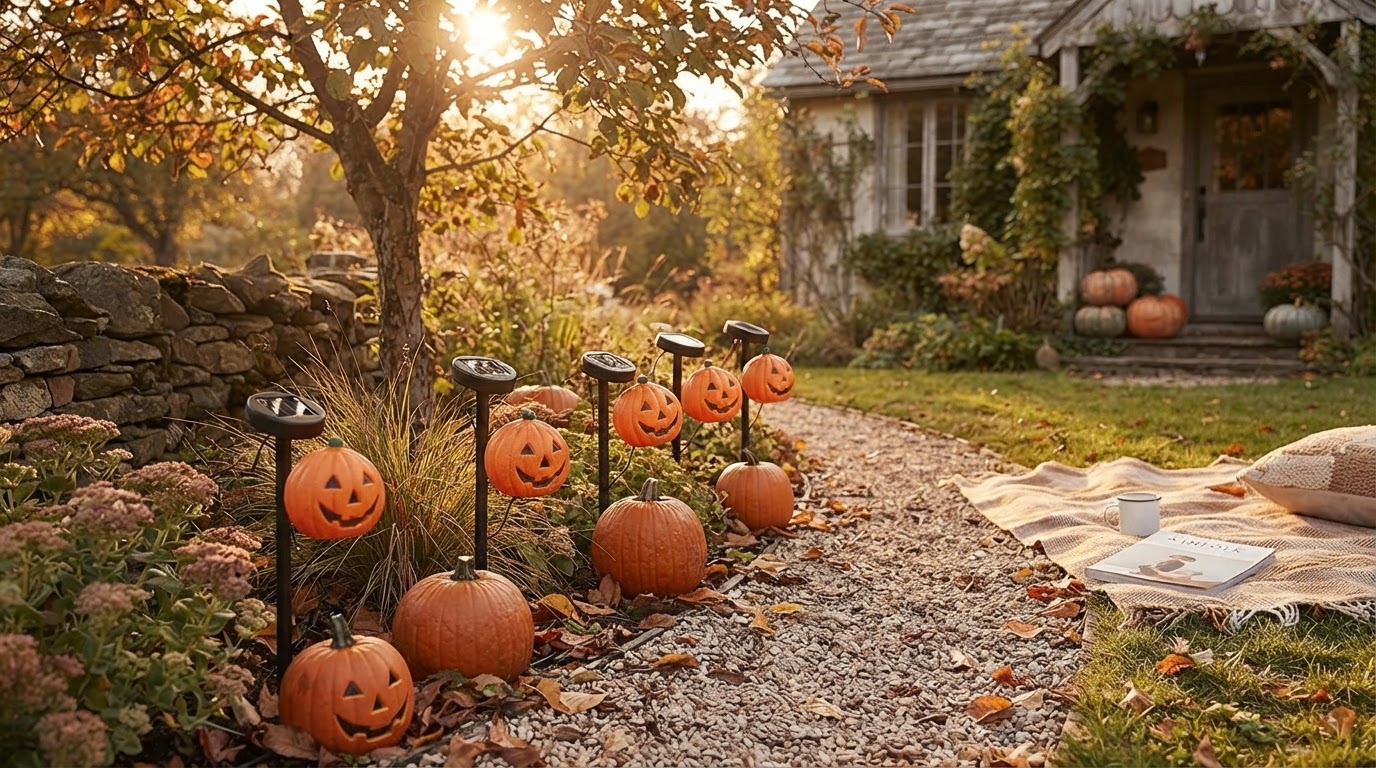
How do solar Pumpkin Stake lights improve garden decor?
 Maya ChenContributing Editor
October 11, 2026 — The solar Pumpkin Stake functions as a zero-emission illumination source that utilizes polycrystalline silicon panels to convert UV radiation into ambient garden lighting, provided the placement achieves a minimum of six hours of direct solar exposure.
The conventional wisdom says that outdoor holiday lighting requires complex wiring or frequent battery replacements to maintain consistent luminosity throughout October. Homeowners seeking light up pumpkin garden decor often prioritize aesthetics over technical durability, yet the performance of these units is entirely dependent on the efficiency of the integrated photovoltaic cell and the milliampere-hour (mAh) capacity of the internal storage.
How does weather impact light up pumpkin garden decor?
The solar Pumpkin Stake maintains operational integrity through standard precipitation cycles due to its IP-rated weather-resistant casing, though extreme cloud cover significantly reduces its discharge duration. While many consumers assume that any light will suffice for a seasonal display, the durability of materials is the primary failure point. According to product specifications from At Home, plastic options for Halloween pumpkins are specifically engineered to hold up well to the elements compared to interior-grade glass alternatives. The solar Pumpkin Stake leverages this material advantage by using high-density polymers that resist UV degradation and thermal expansion. Run the math: a unit with a 600mAh battery requires a specific solar intake to reach full capacity; during overcast autumn days in northern latitudes, a stake may only reach 40% of its intended runtime. I'll change my mind when solid-state batteries become the industry standard for seasonal stakes, but currently, the efficiency of the silicon panel remains the bottleneck for all-night illumination.
What is the most effective placement for solar Pumpkin Stake units?
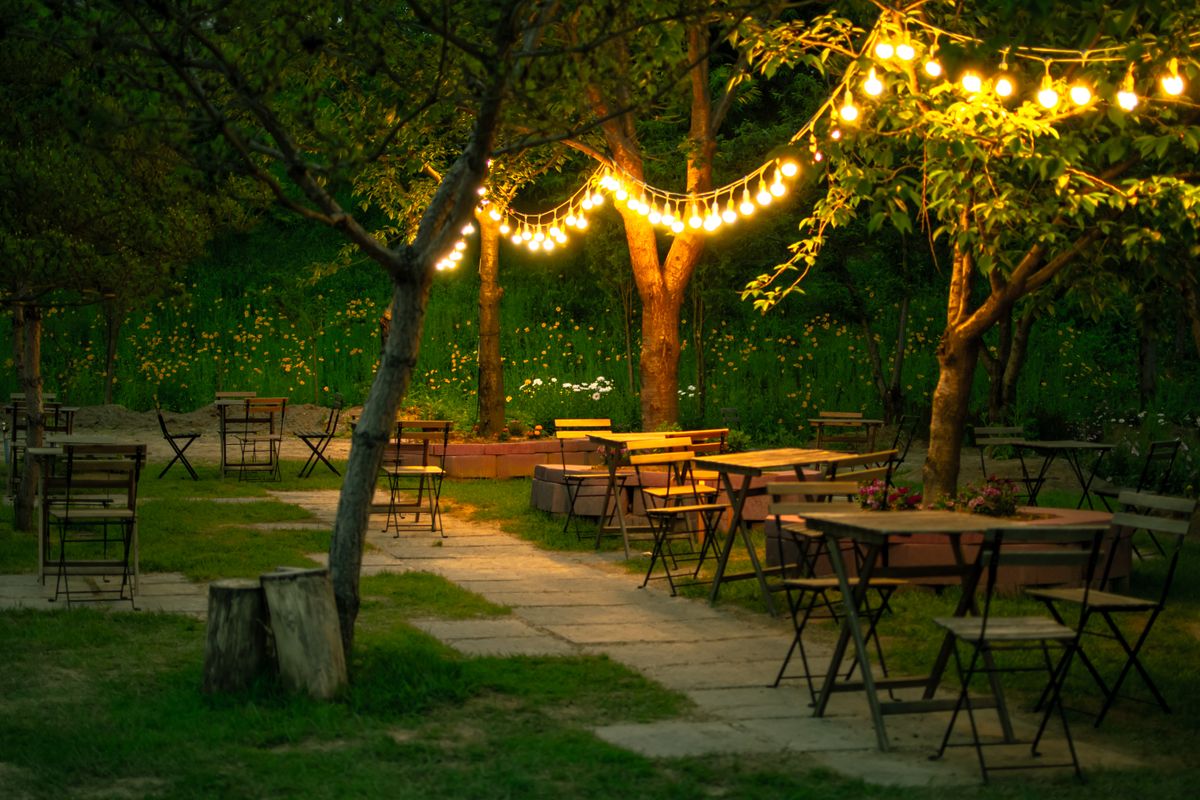
Photo by Constantine Kim on Pexels
Effective placement requires an unobstructed path to the southern sky, as even partial shading from dormant garden foliage can decrease energy harvesting by up to 50%. Here's the part nobody talks about: placing these stakes under large deciduous trees—common in autumnal landscaping—often leads to premature light failure before the evening is over. Data from Pinterest trends suggests that topiary and outdoor lantern displays are increasingly popular, but these complex arrangements often create self-shading issues that compromise solar sensors. To optimize the solar Pumpkin Stake, users must ensure the sensor is not triggered by secondary light sources like streetlamps or porch lights, which can trick the internal photocell into remaining in the 'off' state. Proper spacing is equally critical; overcrowding stakes can lead to a cluttered visual field that diminishes the individual impact of the jack-o'-lantern design. For those coordinating a larger display, integrating orange solar pumpkin lights provides a color-consistent baseline that complements the focal point stakes.
Quick answers
Q: How long do solar Pumpkin Stake lights stay illuminated after a full charge? A: Under optimal conditions with 6 to 8 hours of direct sunlight, the solar Pumpkin Stake typically provides 8 to 10 hours of continuous light. This duration is sufficient to cover the peak evening hours of Halloween festivities.
Q: Can these stakes be used in freezing temperatures? A: The solar Pumpkin Stake is designed for autumn weather, but performance may degrade if temperatures drop below 32 degrees Fahrenheit for extended periods. Most high-density plastic models from retailers like Grandin Road are rated for standard outdoor seasonal use but should be stored if a hard freeze occurs.
Q: Does the solar Pumpkin Stake require manual activation? A: No, the unit features a built-in light sensor that automatically activates the LED at dusk and deactivates it at dawn. Users must ensure the initial power switch is set to 'on' during the pumpkin pathway markers solar installation process.
Q: What is the best way to clean the solar panels? A: Use a damp, non-abrasive cloth to remove dust and fallen leaves from the top of the solar Pumpkin Stake every two weeks. Maintaining a clear panel is essential for maximizing the charging efficiency of the internal battery during the shorter days of October.
For more advanced layout strategies, refer to the jack o lantern walkway lights guide to plan your perimeter lighting. Learn more about solar Pumpkin Stake at https://solyrapumpkinstake.com.
Sources
Photo by Nothing Ahead on Pexels
- Halloween Pumpkins & Pumpkin Decorations - Grandin Road
- Light up Pumpkins - Pinterest
- Halloween Pumpkins 2026 & Jack-O'-Lantern Decor | At Home