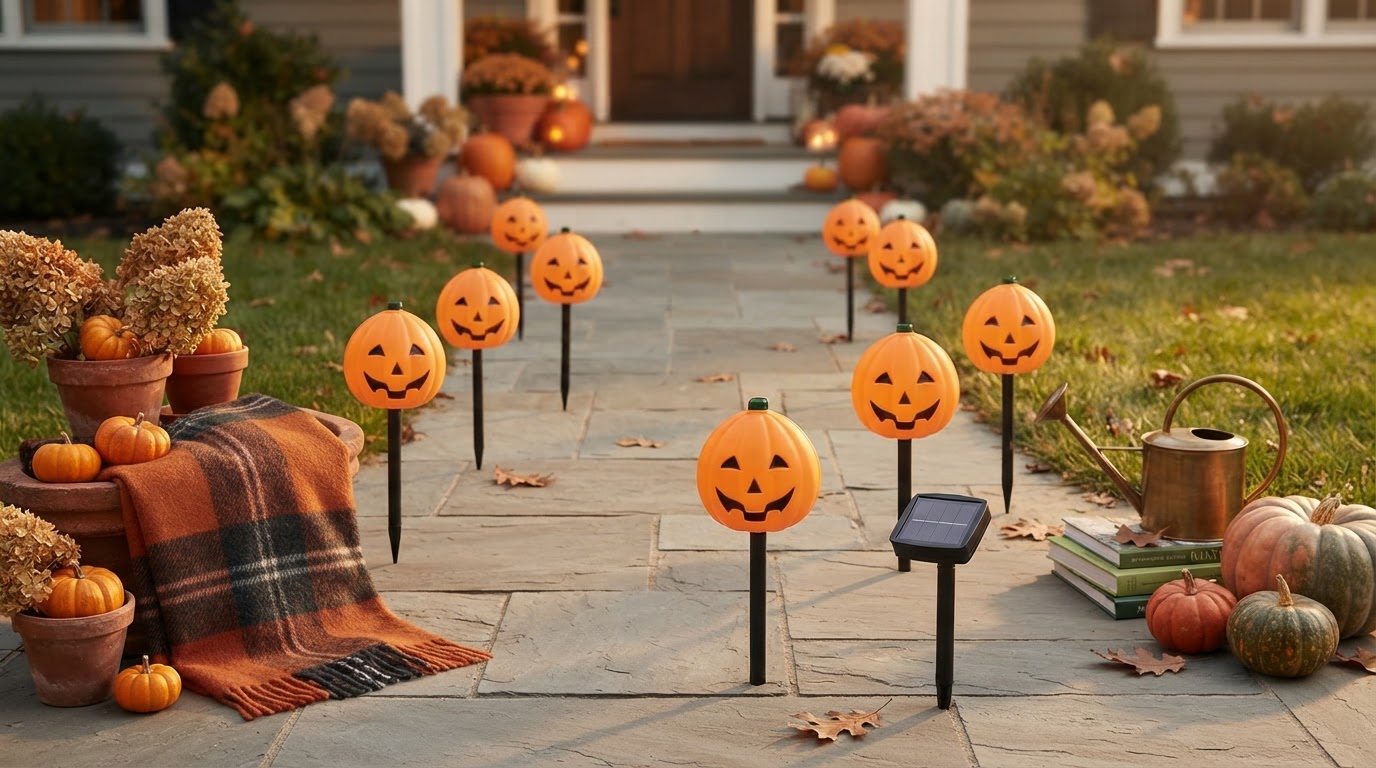
Mapping Jack O Lantern Walkway Lights for Maximum Impact
 Maya ChenContributing Editor
September 11, 2026. This analysis evaluates the technical deployment of solar-powered jack o lantern walkway lights for residential properties. It is intended for homeowners seeking to balance aesthetic seasonal themes with energy-independent infrastructure.
The Efficiency Gap in Seasonal Lighting
The conventional wisdom says that more is always better when it comes to seasonal illumination. High-wattage incandescent displays have long been the standard for creating a visible festive perimeter, yet this approach ignores the significant energy waste and installation labor required for temporary setups. Homeowners often settle for low-cost, battery-operated plastic lanterns that fail within a single season, creating a cycle of electronic waste that serves neither the budget nor the environment. According to seasonal lighting trends tracked in Reddit discussions regarding jack o lantern garden stakes, users frequently report frustration with moisture ingress and short battery life in generic off-the-shelf units. These failures typically stem from poor seal integrity and inadequate photovoltaic surface area, which cannot maintain a charge during the shorter daylight hours of late October. When the goal is a consistent fall pathway lights solar installation, relying on hardware that requires manual intervention defeats the purpose of an automated exterior. Most consumers overlook the lumen-to-wattage ratio, assuming that any orange glow is sufficient, but the reality is that poor light distribution leads to dark spots that pose actual tripping hazards on a walkway. Here's the part nobody talks about: the environmental cost of disposable seasonal lighting is rising, and the transition to durable, solar-integrated systems is no longer optional for those prioritizing long-term property maintenance.
Technical Advantages of solar Pumpkin Stake Systems
Addressing the failure points of standard seasonal decor requires a shift toward dedicated solar Pumpkin Stake units. These devices bypass the primary weakness of traditional jack o lantern walkway lights by integrating the energy source directly into the mounting hardware. By utilizing high-efficiency monocrystalline solar panels, these stakes capture ambient light even on overcast autumn days, which is a critical requirement for outdoor solar fall decorations. Run the math: a standard AA-battery powered stake might provide 4 hours of illumination before dimming, whereas a solar Pumpkin Stake is engineered to store enough energy for 8 to 10 hours of operation. This ensures that the orange pumpkin pathway lights remain active throughout the night rather than fading by 9:00 PM. The internal circuitry is designed to resist the temperature fluctuations common in September and October, preventing the rapid battery degradation seen in non-specialized hardware. Furthermore, the stake design provides a stable anchor that resists wind-driven displacement, a common issue with lightweight solar fall lawn decorations that lack proper grounding. By focusing on a single, high-performance unit, the deployment of solar fall lawn decorations becomes a one-time installation task rather than a nightly maintenance chore. The integration of dusk-to-dawn sensors eliminates the need for external timers, ensuring that the walkway is illuminated the moment natural light levels drop below the functional threshold.
Strategic Deployment and Selection Framework
Choosing the right hardware for a walkway requires a rigorous assessment of the specific environment. Not every yard provides the same solar access, and a failure to account for shadows from eaves or trees will result in uneven performance across the lighting line. Before purchasing, run a site survey to identify the areas with at least six hours of unobstructed sunlight. A successful installation of jack o lantern walkway lights depends on the following criteria:
- Panel Orientation: Ensure the photovoltaic surface faces south or southwest to maximize energy harvest.
- Spacing Density: Place stakes every 3 to 5 feet to maintain a continuous visual line without excessive overlap.
- Ground Composition: Verify that the soil can support a stake depth of at least 4 inches for structural stability.
- Weather Rating: Confirm an IP65 or higher waterproof rating to withstand autumn rain and frost.
- Lumen Output: Select units that provide enough ground-wash light to illuminate the actual walking surface, not just the decorative shell.