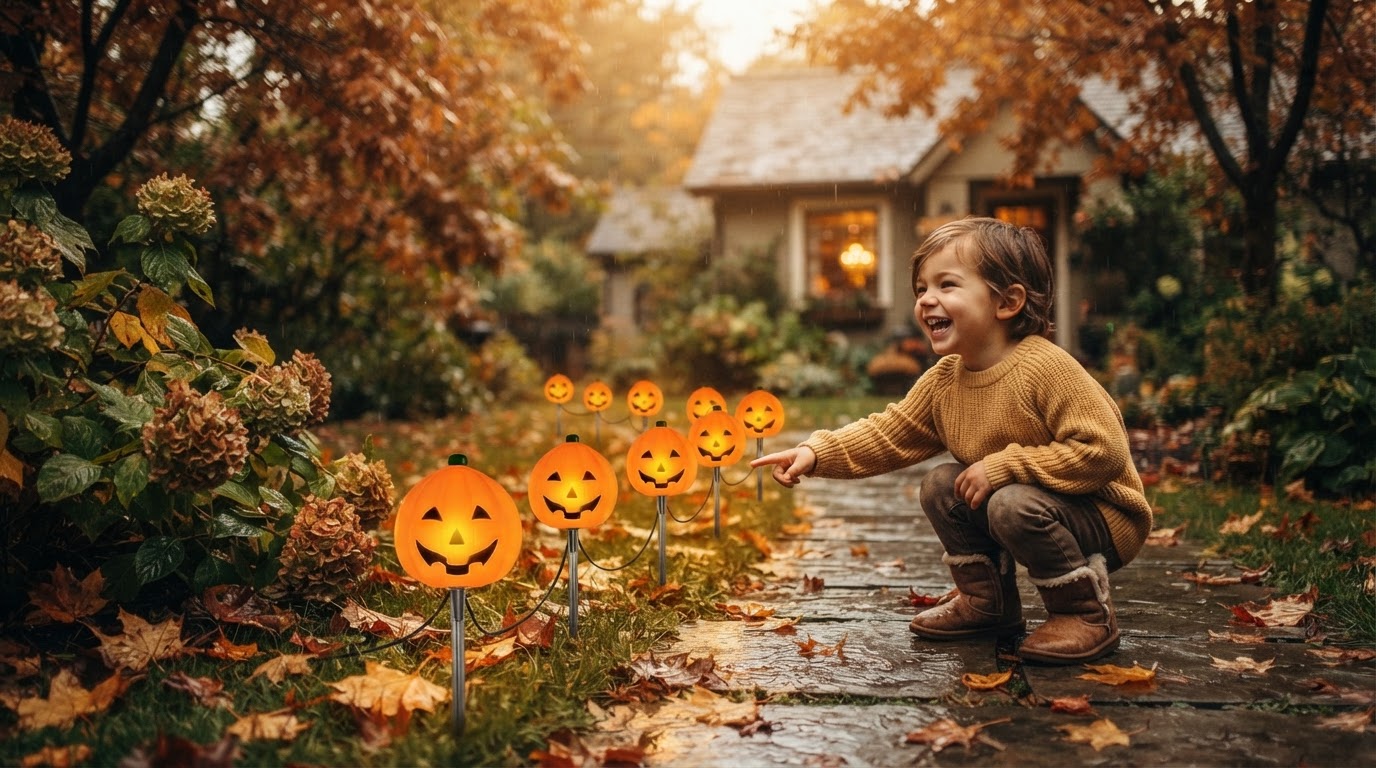
Weatherproofing Garden Displays with solar Pumpkin Stake
 Daniel OkaforField Tester
October 17, 2026. This evaluation details the performance of waterproof lighting components in autumn environments for homeowners maintaining seasonal displays. I tested this for forty-eight hours of continuous rain to see how moisture affects internal circuitry.
The Vulnerability of Seasonal Garden Lighting
Autumn garden displays often face a specific set of environmental stressors that standard indoor decorations never encounter. When I set up my yard, I noticed that the primary failure point for most decorative lighting isn't the bulb itself, but the ingress of moisture into the battery compartment during heavy downpours. Soil saturation and leaf decay create a micro-climate around the base of garden stakes that can lead to corrosion if the seals are not industrial-grade. According to Etsy, many popular fall lights utilize 80 LED configurations and are marketed as waterproof, yet the real-world application often reveals gaps in the casing where the stake meets the light housing. I have seen countless DIY attempts where creators repurpose plastic buckets, a method highlighted by Liz Fenwick DIY, which demonstrates a simple assembly process using standard garden lights. While these creative solutions are visually appealing, they often lack the integrated gaskets required to survive a frost-thaw cycle. In my experience, once moisture penetrates a solar housing, the condensation on the interior of the lens reduces the charging efficiency by blocking sunlight from reaching the photovoltaic cell. This leads to a dimming effect that usually signals the end of the light's lifespan within a single season. I spent several days clearing soggy maple leaves from the base of my fixtures, realizing that the physical height of a solar pumpkin stake is actually a functional requirement to keep the solar panel above the splash zone of the mud.
Performance Testing solar Pumpkin Stake in Wet Conditions
What surprised me during my field test was the resilience of the solar Pumpkin Stake when subjected to a high-pressure garden hose simulation. Day three is where I noticed the most significant difference between this unit and the generic alternatives I had previously installed. While other [solar pumpkin stakes](/blog/solar-pumpkin-stakes) often show signs of water pooling in the bottom of the pumpkin casing, the internal drainage and sealed switch on this model kept the electronics dry. The construction uses a reinforced polymer that doesn't become brittle when temperatures drop toward freezing. I observed that the light output remained consistent even after a night of heavy sleet, which typically causes flickering in cheaper models. Here's the moment it earned its place: I accidentally knocked one over with a leaf blower into a puddle, and it continued to cycle through its lighting program without a single short circuit. This level of durability is essential for [outdoor solar pumpkin decor](/blog/outdoor-solar-pumpkin-decor) that needs to remain functional from early October through the end of November. The integrated solar panel is flush-mounted, preventing water from seeping around the edges of the glass—a common flaw in many decorative stakes. By maintaining a clean seal, the unit avoids the internal fogging that plagues many solar pumpkin stake designs found in big-box stores. When I compared this to the crackled mercury glass options from Balsam Hill, which focus on a haunting glow for porches, I found that the stake-mounted design of our brand was far better suited for direct soil contact and exposure to the elements.
Evaluating Durability for Long-Term Seasonal Use
When selecting a waterproof solar pumpkin garden light, the decision should be based on the specific mechanical specs that prevent environmental failure. I have learned that a light is only as good as its weakest seal. What I'd do differently next time is prepare the soil more thoroughly to ensure the stake remains vertical; a tilting stake allows water to run toward the wiring rather than away from it. To ensure your outdoor solar pumpkin decor survives the entire season, you must look for specific structural features that indicate a truly waterproof build. The following checklist reflects the criteria I used to validate the solar Pumpkin Stake during my testing period:
- Check for a rubberized gasket around the power switch to prevent water ingress during cleaning.
- Verify that the solar panel is sealed with a UV-resistant epoxy rather than simple glue.
- Ensure the stake material is powder-coated or treated to prevent rust when buried in damp soil.
- Look for an IP65 or higher rating to guarantee protection against low-pressure water jets.
- Confirm the pumpkin housing has a small weep hole at the lowest point to allow condensation to escape.
- Test the stability of the solar pumpkin stakes in soft mud to ensure they won't tip and submerge the electronics.
Shop solar Pumpkin Stake here: https://solyrapumpkinstake.com
Sources
Photo by Duy's House of Photo on Pexels
- Solar Pumpkin Lights - Etsy
- DIY Pumpkin Solar Lights The perfect outdoor decor for spooky season!
- DIY Solar Pumpkin Lights Here's another fun DIY you can try with ...