Optimizing Solar Pumpkin Stake Layouts for Fall Lawns
 Priya RamanSenior Analyst
October 8, 2026 — The shift toward sustainable seasonal lighting has accelerated this autumn, with solar Pumpkin Stake systems becoming a central element in modern lawn design. As homeowners transition from summer landscapes to harvest themes, the integration of renewable energy sources into decorative displays offers a maintenance-free alternative to traditional corded props.
Effective seasonal decorating requires balancing visual impact with technical constraints like sun exposure and terrain. According to insights from Balsam Hill, solar-powered decorations are increasingly favored for being eco-friendly and cost-effective, particularly when used as garden stakes that require no external wiring. To achieve a professional aesthetic, think of it as a matrix of visibility and energy capture. By organizing the lawn into distinct zones, users can maximize the 8,500 monthly search impressions worth of interest in these jack-o'-lantern styles while ensuring the hardware performs reliably throughout the cooler months.
The Three-Zone Placement Strategy
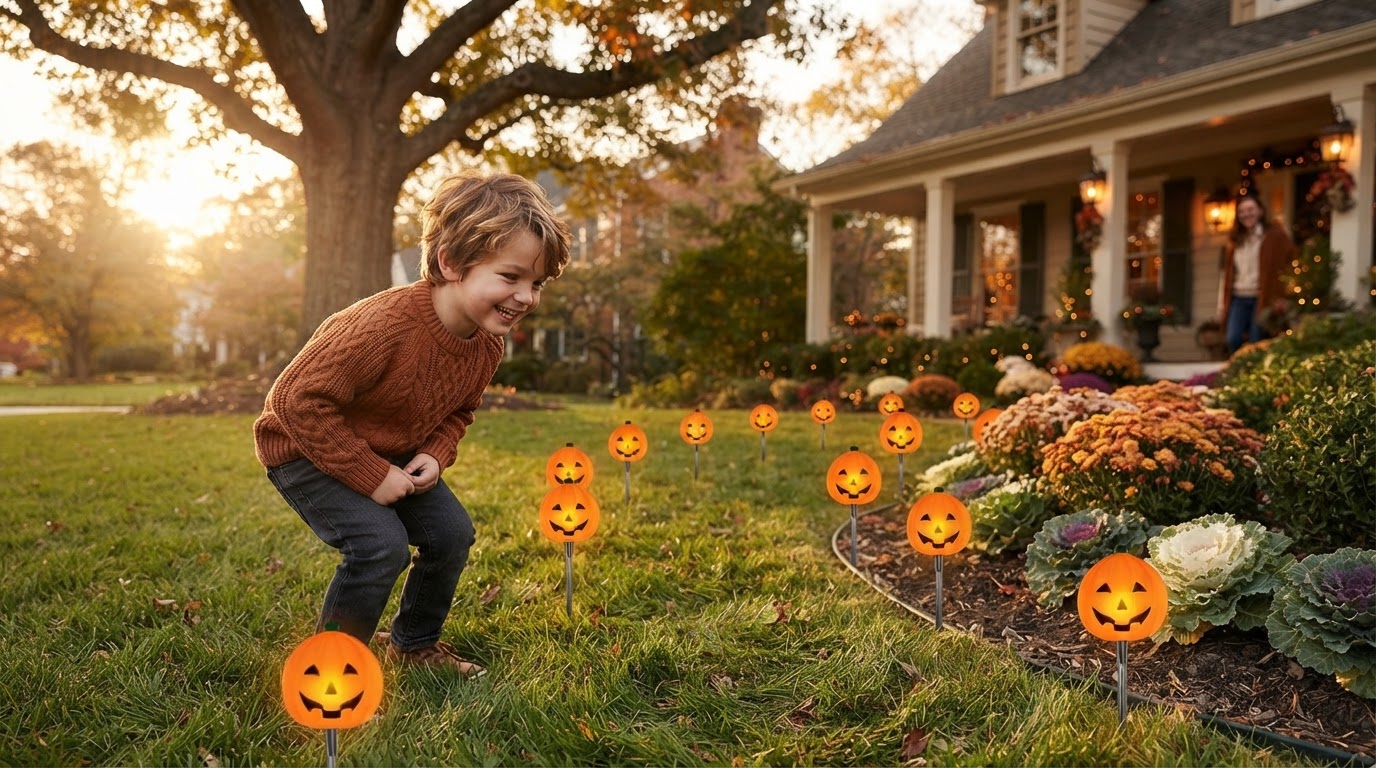
Successful deployment of the solar Pumpkin Stake relies on a three-axis model: light density, solar orientation, and pathway safety. The decision rule is to place high-density clusters at focal points—such as porch steps or driveway entrances—while using singular stakes to define the boundaries of the lawn. For a standard 500-square-foot front yard, a staggered arrangement of eight to twelve stakes provides sufficient ambient glow without overcrowding the landscape. Users should prioritize the southern-facing portions of their property to ensure the internal batteries receive at least six hours of direct sunlight. While the solar Pumpkin Stake is designed for durability, performance is optimized when units are placed at least three feet apart to prevent shadow casting from one unit onto another's photovoltaic cell. Data indicates that these units are frequently sought after for their specific jack-o'-lantern aesthetic, making them ideal for selecting solar Pumpkin Stake garden lighting for fall where visual themes are paramount. Proper spacing also ensures that the waterproof solar pumpkin garden light housing is not obscured by low-lying autumn foliage, which can trap moisture against the sensors. Once you see it this way, the lawn becomes a grid where each stake serves as both a decorative marker and a functional light source. This structured approach is especially useful when determining why choose solar Pumpkin Stake for fall pathway lights versus using them as scattered garden accents. Consistency in height and orientation across the lawn creates a cohesive look that mimics professional landscape architecture.
Expert tip: To maintain peak performance, wipe the solar panels with a damp microfiber cloth every two weeks to remove fallen leaves and dust, ensuring the internal sensors accurately trigger the dusk-to-dawn functionality.
Maintaining a clear line of sight between the sun and the stake is the most critical factor for longevity. For further technical details on durability, consult the guide on solar Pumpkin Stake weatherproofing and performance standards.
Sources
Photo by Nothing Ahead on Pexels
- Solar Accents - Plow & Hearth
- Sustainable Solar Lights as Halloween Décor - Balsam Hill
- Easy DIY Fall Solar Lights Outdoor Decoration Ideas! - YouTube