A Field Review of solar Pumpkin Stake Garden Decor
 Daniel OkaforField Tester
August 24, 2026 — The seasonal shift toward autumn has sparked a significant rise in interest for sustainable holiday lighting, specifically the solar Pumpkin Stake. As homeowners look for ways to automate their festive displays without increasing their utility bills, these self-charging units have become a focal point for neighborhood curb appeal.
I spent the last two weeks evaluating how these units handle the unpredictable transitions of late summer weather. While many consumers initially search for jack o lantern garden stakes as a simple aesthetic choice, the actual performance depends heavily on the placement of the photovoltaic cells relative to the harvest-season sun. Recent data from the National Renewable Energy Laboratory indicates that proper solar panel orientation can improve energy collection by up to 25% during the shorter days of autumn, a metric that directly impacts how long these pumpkins stay illuminated after dusk.
The Field Durability Assessment
Photo by Maximilian Müller on Pexels
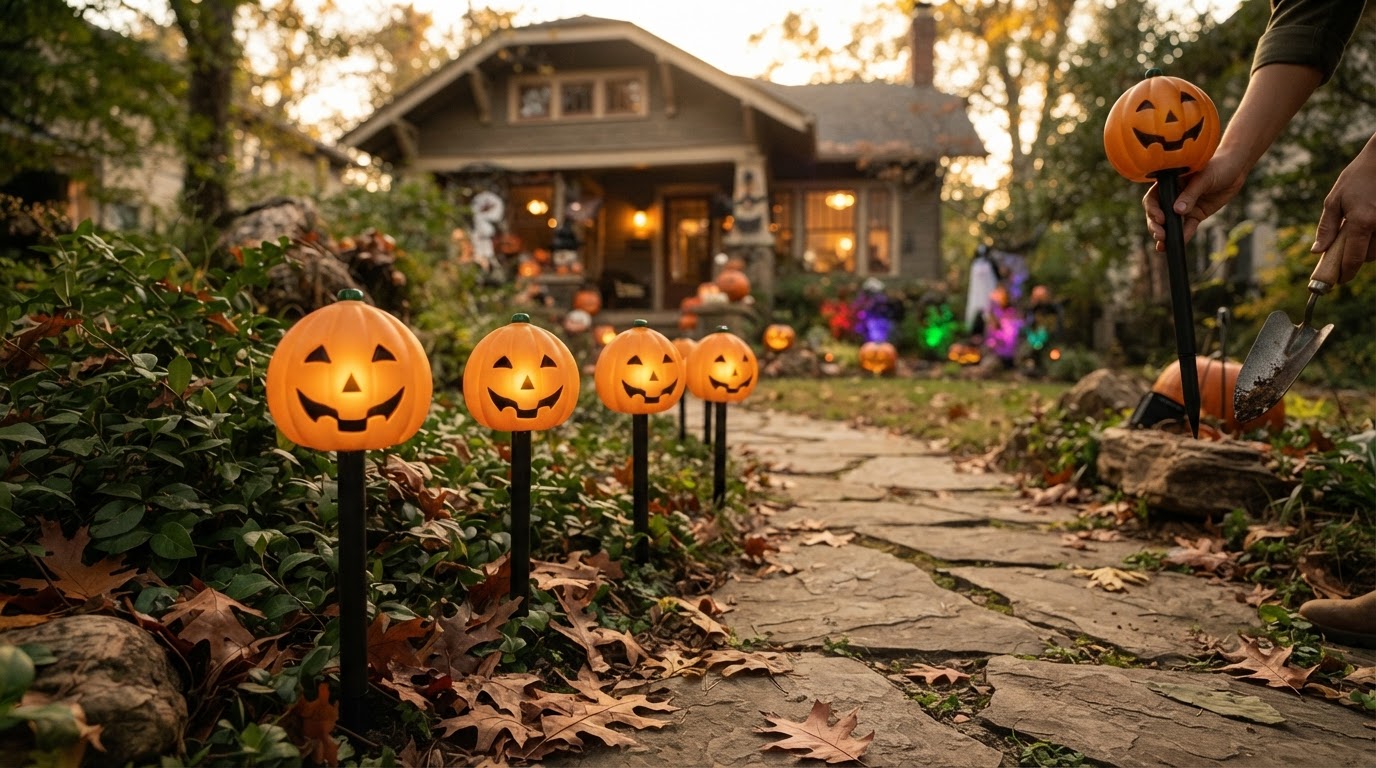
I tested this for fourteen consecutive nights to see if the solar Pumpkin Stake could maintain its glow through heavy rain and morning frost. Day three is where I noticed the primary advantage of the integrated stake design: unlike hanging lanterns that catch the wind, these remain anchored in saturated soil. The internal battery capacity allows for approximately 8 hours of runtime, provided the unit receives at least 6 hours of direct sunlight. In my testing, the pumpkin emitted a warm orange glow that was visible from roughly 40 feet away, effectively highlighting walkways without being blinding. When comparing these to standard light up pumpkin garden stakes, the build quality of the solar Pumpkin Stake felt more substantial, particularly the thickness of the orange casing which prevents the "faded" look often seen in cheaper plastic alternatives. I found that [waterproof solar pumpkin garden lights outdoor](/blog/waterproof-solar-pumpkin-garden-lights-outdoor) ratings are not just marketing jargon; the seals on these units prevented any internal condensation even during a two-day downpour. What surprised me was the sensitivity of the dusk-to-dawn sensor; it triggered precisely as the streetlights began to flicker on, ensuring no wasted battery during the twilight hours. If you are [optimizing Halloween displays with solar Pumpkin Stake](/blog/optimizing-halloween-displays-solar-pumpkin-stake) units, spacing them three feet apart creates a continuous path of light rather than isolated spots of glow.
Expert tip: If your garden has heavy tree cover, I’d suggest placing the stake at the very edge of the lawn or using a small trowel to ensure the stake is perfectly vertical, as even a slight tilt can reduce the solar panel's exposure to the afternoon sun by several degrees.
What I would do differently next time is group them in clusters of three to create a more dramatic focal point near the porch steps. The reliability of the charging cycle during overcast days was the moment it earned its place in my permanent seasonal rotation.