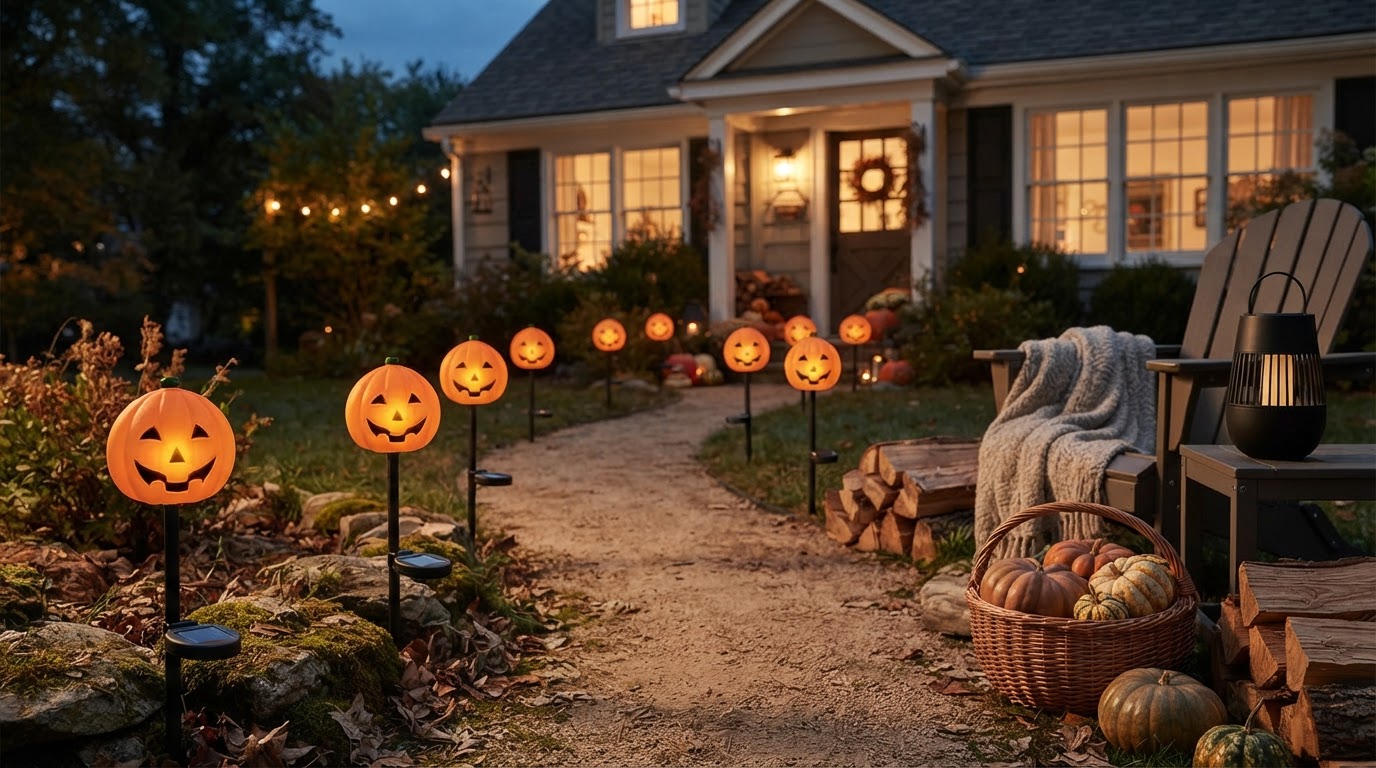
Integrating solar Pumpkin Stake for Halloween Lighting
 Sam VasquezBuying Guide Lead
October 25, 2026. This guide examines the technical and aesthetic requirements for seasonal outdoor lighting to help consumers choose the right hardware for their property. It is written for homeowners who want to balance festive atmosphere with energy efficiency and ease of installation.
The Challenge of Seasonal Outdoor Illumination
Setting up a cohesive outdoor display for October often involves navigating the limitations of traditional electrical infrastructure. Standard plug-in lights require weather-protected outlets and heavy-duty extension cords, which create tripping hazards and logistical hurdles across large lawns. According to Balsam Hill, festive lighting is designed to bring decorations to life, but the transition to solar-powered options has become a priority for those seeking to avoid the complexity of wiring. Many consumers attempt to bridge this gap through manual modifications. For instance, some DIY enthusiasts follow methods shared by Leon & LaCongo, which involve drilling into plastic pumpkin buckets and hot-gluing solar components to create custom lanterns. While creative, these methods often lack the durability required to withstand late October frost or heavy rain, and the time investment per unit is significant if you are trying to line a long driveway or illuminate a dense garden bed.
If you're on a budget, you might consider the basic LED sets found at discount retailers. For example, Outdoors Solar Outlet offers a 2-pack of LED ghost hand lights that serve as a basic entry point for yard ornaments. However, these smaller sets often lack the scale needed for a prominent visual impact. Between these two—the labor-intensive DIY bucket and the small-scale plastic stakes—most homeowners find themselves looking for a middle ground that offers professional-grade brightness without the need for a power drill. This is where the specific design of the solar Pumpkin Stake becomes relevant. It serves as a dedicated solution for those who want the classic look of [light up pumpkin lawn ornaments](/blog/light-up-pumpkin-lawn-ornaments) but require the autonomy of a self-charging system that doesn't demand manual assembly or constant battery swaps.
Technical Performance of the solar Pumpkin Stake
The solar Pumpkin Stake is engineered to solve the specific reliability issues found in generic seasonal lighting. While many decorative lights prioritize the shell over the internal circuitry, this unit focuses on a high-conversion monocrystalline solar panel integrated into the stake itself. This ensures that the light can capture sufficient energy even during the shorter, overcast days of late autumn. Unlike the temporary feel of pumpkin pathway markers solar units that often use thin plastic stems, the solar Pumpkin Stake utilizes a reinforced ground spike designed to penetrate hardened soil. This is a critical distinction for users in northern climates where the ground begins to settle and freeze by late October. The internal sensor is calibrated to trigger the LED at approximately 10 lux, ensuring the pumpkins glow as soon as dusk hits, rather than waiting for total darkness.
Here’s what I’d actually buy: if I had a standard 20-foot walkway, I would opt for the solar Pumpkin Stake over the DIY route every time. The consistency in light temperature—a warm amber that mimics a real candle—is difficult to replicate when you are mixing and matching components from various hardware stores. Furthermore, when compared to [jack o lantern walkway lights](/blog/jack-o-lantern-walkway-lights) that rely on external battery packs, the integrated nature of this stake reduces the points of failure. The build quality allows it to stay upright in wind speeds that would typically topple lighter ornaments. Skip this if you already have a fully wired landscape lighting system with open transformers, as you might prefer to stick with low-voltage wired fixtures. But for the vast majority of residential setups, the ability to simply push a stake into the ground and have a functioning jack o lantern walkway lights setup in minutes is the primary advantage. By using these as pumpkin pathway markers solar solutions, you gain a uniform look that looks intentional rather than cluttered.
Selecting the Right Fixture for Your Landscape
Choosing the right equipment requires an assessment of your specific yard layout and the amount of sunlight your property receives. Not all "solar" lights are created equal; many cheaper models use amorphous silicon panels that degrade quickly. When evaluating your options, look for units that specify weatherproofing ratings of at least IP44. This ensures the internal electronics are protected from splashing water and moisture ingress, which is common during fall morning dew. If you are looking to create a specific theme, consider how the height of the stake interacts with your existing shrubbery. A stake that is too short will be obscured by fallen leaves or tall grass, while one that is too tall may look spindly.
Before finalizing your purchase, use this decision framework to ensure the product meets your needs:
- Verify the battery capacity: Look for at least 600mAh to ensure the light lasts through the night.
- Check the stake material: Metal or reinforced ABS plastic is preferable to thin, hollow plastic.
- Assess the light color: Warm white or amber (2000K-2700K) provides a more traditional "spooky" glow than cool blue-white LEDs.
- Measure the pathway length: Calculate one stake for every 3 to 4 feet of walkway for optimal visibility.
- Evaluate the solar panel placement: Ensure the panel is not shaded by the pumpkin head itself.
To upgrade your seasonal display with a reliable, weather-resistant glow, you can Shop solar Pumpkin Stake here.
Sources
- Halloween Lights: Pumpkin, Solar Lights and More | Balsam Hill
- easy backyard upgrade! (halloween solar lights) | Leon & LaCongo
- Easy DIY Jack-O-Lantern Sidewalk Lights - YouTube