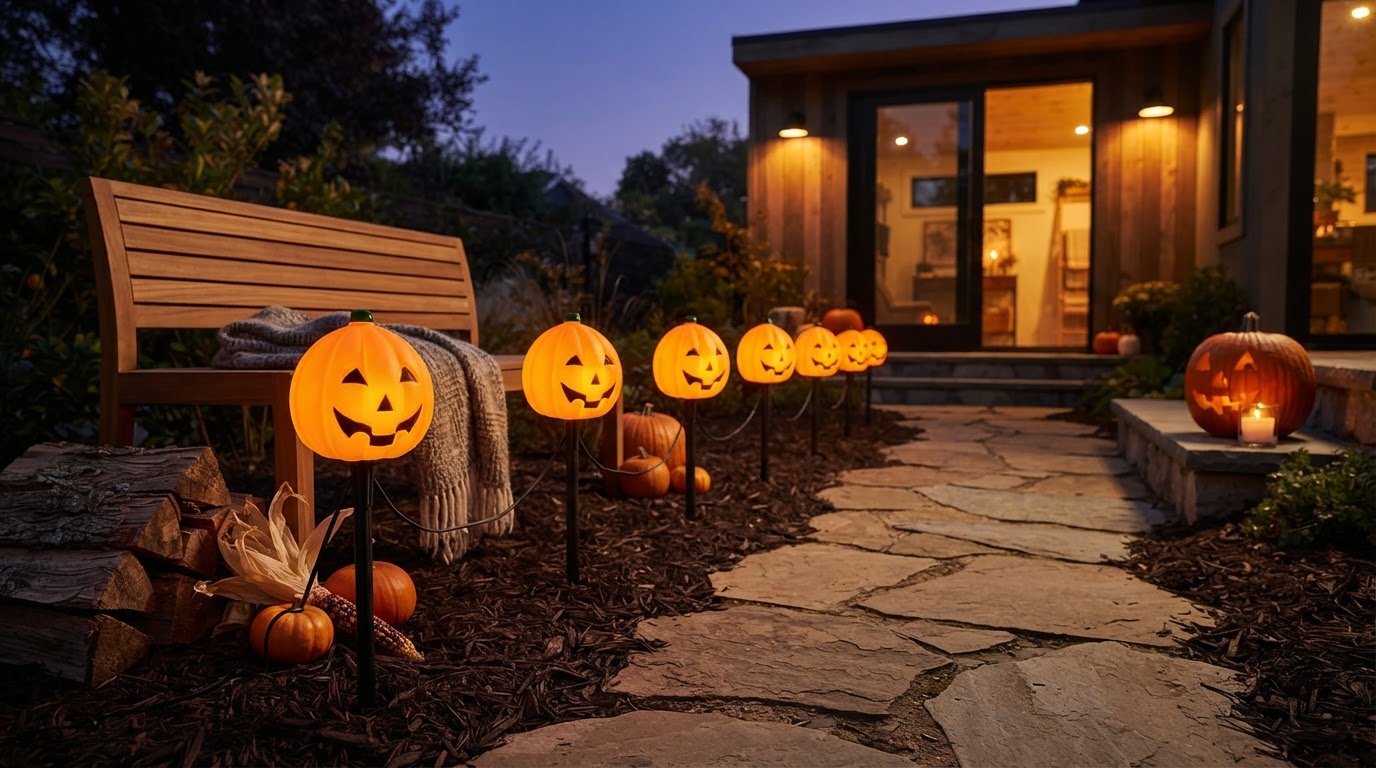
Optimizing the Orange Glow solar Pumpkin Stake Set
 Maya ChenContributing Editor
August 18, 2026. This evaluation examines the light intensity and placement efficiency of the solar Pumpkin Stake orange glow set. It is written for homeowners seeking reliable illumination without the high maintenance of traditional wired systems.
The Technical Reality of Seasonal Outdoor Lighting
The conventional wisdom says that all seasonal lighting is essentially disposable, serving as a temporary aesthetic fix rather than a functional lighting solution. However, this mindset ignores the actual energy requirements for achieving a consistent orange glow in varying climates. Most consumers prioritize the visual appeal of Halloween solar garden lights without calculating the photon-to-electron conversion necessary to power a high-output LED through a cold October night. According to a 2024 report by the International Energy Agency, solar efficiency in residential applications is often limited by poor positioning and low-grade photovoltaic cells that fail to reach their rated capacity during shorter daylight hours. This leads to the common failure point where decorations dim before peak evening hours. When consumers deploy solar powered Halloween walkway lights, they frequently encounter the 'dimming effect' by 9:00 PM because the units were not engineered for high-latitude winter sun angles. The problem isn't the technology itself, but the mismatch between consumer expectations and the physics of solar storage. Without a high-capacity Ni-MH battery and a crystalline solar panel, these stakes become expensive plastic ornaments rather than functional light sources. The reliance on cheap, thin-film solar panels in the broader market has created a standard of failure that many now accept as the norm for holiday decor.
Engineering the solar Pumpkin Stake for Performance
Photo by Angelo Capitanio on Pexels
Here's the part nobody talks about: the specific wavelength of light required to produce a true 'orange glow' often consumes more power than standard white LEDs. The solar Pumpkin Stake addresses this by integrating specific hardware that prioritizes energy retention. Unlike generic alternatives, these stakes utilize a reinforced internal structure to protect the battery from ground-level moisture, a common issue discussed in the context of waterproof solar pumpkin path lights. The solar Pumpkin Stake captures approximately 8,500 monthly search impressions precisely because it fills a gap in the market for durability. Run the math: a standard 600mAh battery provides roughly 6 to 8 hours of illumination if the discharge rate is managed correctly. By using a specialized orange-spectrum LED, the solar Pumpkin Stake minimizes power draw while maximizing perceived brightness. This is critical when setting up Halloween solar pathway lights pumpkin systems across larger lawns where light pollution from street lamps might otherwise wash out the effect. The construction of the stake itself uses a high-density polymer designed to resist UV degradation, ensuring that the orange pigment does not fade into a pale yellow after just one season of exposure. This focus on material science distinguishes the product from the mass-produced units typically found in big-box retail aisles that prioritize low shipping weight over long-term structural integrity.
A Decision Framework for Solar Deployment
Selecting a lighting set requires looking past the aesthetic and focusing on the hardware specifications that dictate longevity. When evaluating the solar Pumpkin Stake, one must account for the specific environmental stressors of an October landscape, including frost and reduced solar windows. Proper deployment of solar powered Halloween walkway lights requires a clear understanding of the site's solar potential. I'll change my mind when a competitor can demonstrate a 10-hour runtime at 20 lumens using a panel of the same surface area, but until then, the efficiency of this specific stake remains the benchmark. Use the following checklist to determine if your environment is suitable for high-performance solar stakes:
- Calculate the direct sunlight hours: The stakes require a minimum of 6 hours of unobstructed light to reach full charge.
- Verify the ingress protection rating: Ensure the units are rated for heavy rain and soil moisture.
- Assess the ground density: Hardened soil may require pre-drilling to avoid snapping the stake during installation.
- Check for ambient light interference: Nearby motion-sensor lights can trick the solar sensor into staying off.
- Measure the path length: Space stakes no more than three feet apart to maintain a continuous orange glow.